Showing posts with label Sunni and Shiite. Show all posts

Friday, November 14, 2008

Iraq is Catch-22: I Give Up


I've given up on Iraq in the same way I've given up on Islam.

it was a moment that, taken by itself, is virtually meaningless, but it somehow finally allowed me to realize the relentless build up to the conclusion that was becoming clearer to me everyday as I read more into Iraqi contemporary history, Islamic history, and the methods of Western involvement in the region, and as I talked more with "Iraqis" around me, (that word will forever be in quotations now in this blog).

That moment occurred about a week ago, I was reading an article by Ali al-Dabbagh, spokesman for the government of Iraq, on his personal website, that article is called 'Towards Building A Shia National Identity.' Several sectarian Sunni websites were outraged about it, I was curious for some insights into the personal views of the kind of people inside the Iraqi government, his article was equally sectarian: the text, which I remind you, represents the view of a high official in the united democratic Iraqi government, bitched in the usual shy and sly manner of Shi'i polemics about the continous '14 centuries of terrorism' genocide against the Shia, the murder of 12 Imams by 'them', then this vengeful masturbatory buildup is cut short at the time of release, it then proceeds to navigate means to keep the Shia in power, implying a high degree of religious factionalism. It reminded me of the al-Furat channel in its very early days, when it hasn't yet heard of Public Relations, it pretended that all of Iraq was Hardcore Shia and there were songs to Ayatullah Sistani in every break. I found it hilarious at the time, what did I know.

It was at this historical moment of time that I realized that these people are never going to change, that the hope I was secretly having that those cockroach Islamists would mutate some form of understanding of modern state principles such as co-existence, that the dumbshit Americans would bully them into it somehow. It's obvious that those people are only using 'democracy' as means, never an end. By the way, our freely elected democratic leader issued a law to 'close all nightclubs' in Baghdad recently.

***

I spent my stay in Syria in my aunt's house, who is a pretty active member in the Sunni Islamic Party, the life of that household revolves around one cause entirely, the women are all dressed in drab, terrain-colored titcurtains (jubbas), their knowledge of music is limited to Islamic heartthrobs such as Sami Yusuf, and the television is perpetually tuned to Iqraa'a channel, for an undercover kafir like me, it would've been pretty much eternal damnation if it wasn't for the presence of videogames, (I later learned that they accused me of being a negative influence on the mosque-trekking activities of my male cousins, who took my presence as an excuse to skip the daily Dawn Prayer at the nearby mosque).

So anyway, one day my cousin decides to meet with his friends, who are more active members in the Islamic Party, we are navigating the famous Soq il Hamidiya when one of the ubiquitous pictures of Sayyid Hasan Nasrallah provokes one of the them to instruct me in a hushed, secret-in-the-know tone that the 2006 Israel-Lebanon's true cause was....because a village in Southern Lebanon became Sunni and the Shia and the Jews made it all up to kill all those nawasib. When I politely tell him to suck his own dick and die, the other guys says that al-Askari Shrine was bombed by the Shia themselves, a theory as exquisitely magnificent as saying Osama bin Laden plotted the bombing of the Kaaba, my cousin, who is sectarain but to a less offensive degree, supports me by saying it was the Americans who did it. Remember that all of these people confess to what you know as the 'moderate' form of Sunni Islam in Iraq.
After laborious dialog with two of my cousins, in which I have to circumvent mentalities that still think Sunnis are the majority in Iraq, I finally got them to be reluctantly convinced that secularism is the only way all Iraqis could be truly united by the many common things they have, after a pause, my other cousin relents, "but the only real identity is Islam, Iraq is fake."

This, in a nutshell, sums up the identity of those Islamists, Sunni and Shia, in politics, the Sunni Islamic Party appears more accommodating to the ruling Shia only because it is, like all minorities, is very self-conscious of its weakness as a minority. but its rank-and-file, formed of moderate families such as my own, is as good sectarian people as they come, they are 'moderate' because they don't want to kill the Shia, that doesn't mean they don't hate them.

my aunt, who doesn't even wear hjiab, got a habit of printing out the sort of anti-Shia sectarian fliers and distributes them around...

Don't forget my uncle, whose idea of a reconciliation strategy consists of nuking all the Shia, as he tell me from his comfortable couch.

Of course, this never transpires in public, because two of my uncles got married to Shia before everybody started wearing hijab.

My mother, whom I regarded in my Muslim days as the epitome of what a non-sectarian, cosmopolitan Muslim is having a hard time with me whenever I bug her about my more informed crticisms of some disgusting historical or religious events in Islam, I recently told her that voting for Islamic parties means voting for the division of Iraq, she responded in the same way as my cousins, "It's not because I'm sectarian, it's because I trust them, they're honest [because they're religious]." I said, I'm sure there are pretty decent honest folks in al-Dawa party, would you vote for them? She said "of course not. Their religion is different from ours, to each his own, my boy." To each his own! To each his own piece of the country! what a hypocritical bunch you all are!

Those people will never change their mind, they simply can't, Islam is their raison d'etre. Islam is what made them powerful, it's what gives them purpose, they see how something's wrong, but they try to work some excuses around it, and in the end you will find them voting for those people "they serve True Islam(c)", and then of course there are the annoying people who tell you "Oh, it's politicization of Islam that hurt it so", "Oh, those parties do not represent Islam", until we find that magical version of Islam that all the scholars, dynasties, and ayatollahs have been unable to locate in the past 1400 years (ever since Ali died, or to be more precise, since Umar, who really was the first Arab emperor and colonizer, died), we have to stick with your cute excuse "Ha! Yesterday was different from Today, Ha! The clerics are the ones who get it wrong", it's cameldung, of course, because Islam is an eternal system of government that is fit for all times, even though it thinks comets are divine rockets launched at demons who eavesdrop on God's oval office, and it never separated from politics ; Those people will always find some other Islamist dumbfuck to vote for, because the error is not in the character of a certain person, and in a country where there are two versions of Islam, it's pretty hard to actually act towards people who curse your saints or killed your Imams as your countrymen when you take that sort of shit seriously.

In fact the entire idea of a country means that you have to forget the terrible blood that's been shed between your countrymen, let me ask you this, how could you build any sense of national identity when your countrymen are celebrating their civil war anniversary (Ashoura) passionately every year? To lament the memory of some asshole who unfortunately inherited none of the good qualities of his father except for one : his pompous arrogance, arrogance so huge to think he can stop the birth of an empire by only his name and a bunch of women and children. Do you know why Sunni-Shii tensions go high on Ashura every year, because it's always been this way, they fought over it in 2006 the way they used to fight it in the streets of Abbasid Baghdad, and those hate-mongering Passion Play Ziyarat only serve to remind them of their civil wars, with on side feverishly denying it and the others obsessively trying to prove it, who in France is upset now about the terrible French Wars of Religion? How would Catholic French feel if Protestant Frenchmen would hold an anniversary every year for their martrys?! How is that healthy for a true united nation. Imagine showing The Passion of The Christ all-year long, and taking it very seriously. Since you won't take my words for value here they are on the tongue of the Iraq Info God, Hanna Batatu : "But Islam in Iraq has been more a force of division rather than integration." (p. 17)

and forget secularism, okay I'm told that the Sunni are somehow more 'secular' (and by that, I persume they mean the honor-killing tribes of al-Ramadi, who subscribe to a code of laws even more ancient than Islam), Iraq is a Holy Land for Ali's sake! The marjiya has been established there for several centuries now, I don't think people will just up and say 'fuck it' to Sistani, we're light years away from any mass awakening such as the French Revolution, or any Revolution. Democracy in Iraq will always, always yield those results, if we let people vote, this is what we're going to get, If America truly cares about Iraq, it would have acted to Iraq's democracy the way it acted towards Palestine's democracy, but this theocratic baby is born and raised by Freedom-Loving Uncle Sam, whose biggest friend in the region is the Wahhabi counterpart of backwardness.

So choose democracy, and you get theocracy, which will highlight those differences we could afford to ignore under a secular regime, the Sunnis will never accept it except when they're all but obliterated. What's left? Secular Strongman? been there my friends. This is why modern Iraq was always ruled by injustice, some people will always be forced not to have it their way. It's either this, or true separation.

I'm too angry to be articulate, I'll try to be once I calm down. It seems, inexplicably, that Mister Ghost, my nemesis, has reached conclusions similar to mine, unfortunately, the hateful article he links to is all true.

I got back to listening to Shia masoshistic flagellations recently, they bring me to the edge of crying sometimes, which is pretty ironic considering how much I hate al-Hussein, I just realized that my avatar is dressed in green, my name is Abbas and my blog is called 'Shaqshaqa', I'd probably fake it as a good Shia citizen in our future state.

"O Mahdi, who never forgets his vengeance"
"O Mahdi, we anxiously await the return"
"Don't forgive them, cut off their ancestry"
"For they are the ones who cut off the apostle's"
"He who denies the breaking of the rib inhabits the hellfire!"
-anti-Sunni Shia latmiya (although could be directed at Fadalallah)
يلما تنسى ثارك
ملينا انتظارك
يتأملك يالمنتظر ضلع الوديعة
السيف بيمينك ما تغفى عنك
لا والذي جن و انس صارت تعبده
كوم التكيدك تصلبها بيدك
عالشجرة من اول صنم و الثاني بعده
الأول تصلبه ثارك تطلبه
و تطالب بذاك الفدك و الحق ترده
وللثاني تكصد من عنده تنشد
لمن كسر ضلع الطهر يا غاية عنده
من يبدي الندامة لا تقبل كلامه
هو الذي بيده كسر ضلع الوديعة
لا تغفرلهم اقطع نسلهم
ذوله الذي كطعوا نسل سيد البرية
بارينا رايد حفظ الأماجد
هو الحفظ نسل النبي رغم الاذية
الماضي نعوفه الحاضر نشوفه
جم زاهد بزاهد ترك نهج الرعية
بأسم الديانة يصرح لسانه
وبلا حجج ينكر كسر ضلع الزجية
واليلزم عناده متفيده العبادة
يسكن صقر كلمن نكر ضلع الوديعة


******
NOTE: After accusations of copying entire paragraphs, al-Dabbagh has removed this article, but I found through the Wayback Machine here.

Friday, October 10, 2008

Al-Arabiya.net Hacked - and Overview of the Cyberfitna


ALARABIYA - QARDHAWI - QARDHAWI'S SON - IRANIAN GOVERNMENT - SUNNI/SHIA - CYBERWAR
---------------------------------------------------------------------------------
In a triumphant escalation, Shia hackers won a major battle by taking down the website of Saudi al-Arabiya.net, this is the most high-profile yet on a war that seems to be growing bigger and bigger by the day, looking around Shia websites it seems to me that there are many who view al-Arabiya.net as hostile to Shia, even the very balanced EyeRaki has the view that "Al-Arabiya has not stooped down to the (very low) standards of the Qatar-based Al-Jazeera but it has broadcast its fair share of sectarian-laced reports and anti-Shia rhetoric", he's partly right, as al-Arabiya seems to have the sole interest of advocating not necessarily anti-Shia views but whatever views that promote the Saudi agenda at the time in a polished fashion that might suit their American sponsors, while al-Arabiya often uses headlines such as "Shia Pilgrims Invade Damascus" or something to the effect, they often use sensationalized headlines regardless of the content, in particular some silly The Insider-style content that can only be described as 'sleaze' (the Noor marketing), still, their anti-Hezbollah stance on the Lebanese crisis was very obvious, and even more obvious was the way they handled the ongoing Sunni-Shia cyberfitna and its associations, for example regarding the related incident with the son of Qardhawi, they ignored the whole deal until they got a denial from head of Egyptian Shia, Mohammed al-Durayni. and they promptly published the denial front and center. After al-Arabiya vehemently denied Yusuf's Shiism, he promptly issued a statement on his website denying that he had talked to any newspaper and that those speaking are not speaking in his name or with his consent. All this suggests to me that the man had indeed converted but is having a hard time with it.

But you might ask, how does al-Qardhawi's Son fit into all this?

QARDHAWI

It all started last Ramadhan when the popular and mainstream Sunni cleric Yusif al-Qardhawi decided to launch his usual tirade of criticisms against Shia and their invasion, al-Qardhawi is the most prominent Sunni member in the Sunni-Shii Worldwide Reconcillation Effort, he's also had a televised debate at one point with former Iranian president Hashimi Rafsanjani that led nowhere of course, in general, I think al-Qardhawi's position on Shiis, like the entire reconciliation effort, was always one of pensive frustration, such efforts always boil down to the overconfident Sunnis repeatedly urging the Shia to stop several fundamental Shia practices with the Shia as usual dodging and trying to hand-glad with issues like unity against Israel. al-Qardhawi has criticized the Shia several times before, he even criticized Hassan Nasrallah (calling him "an extremist Shia like all of them") when he issued a statement of lukewarm support during the Lebanon war, but this time he went stronger, calling them 'heretics' and actively protesting proselytizing in Egypt.

al-Qardhawi's comments unleashed a fury among the Shia, with the semi-official Iranian MAHR agnecy accusing him of 'promoting Zionist goals' and proudly boasting about the truth of the Shia creed as proven by those wanting to convert to Shiism who al-Qardhawi is not so happy about.

HACKERS

A few days after al-Qardhawi incident, 300 Shii websites were taken down, those websites ranged from heavyweight Ayatollah official websites (Sistani, Khoei), Iranian religious websites, and even an Iranian file sharing service. The message that appeared on all of these websites carried the typical arrogance of Wahhabi takfirism, which suggested that this group is relevant within the sizable and very organized anti-Shia activity on the Internet.

The Shia retaliated a few days later, but their signature carried some distinct images, first EyeRaki saves me the trouble of the journalist bit:

an extremist Sunni group called GroupXP attacked several Shia websites...all the websites show the same message. The website of the "Zoroastrian Safavid" has been hacked with the "help of Allah". The word "Shia" isn't even used once, instead they are referred to as rejectionists, descendants of Ibn al-Alqami, Zoroastrians and "sons of the Persians". typical language used by Salafis who do not consider Shias within the realm of Islam. Following the attack on hundreds of Shia websites, some Iranian Shia decided to pay back in kind by hacking Sunni websites. A picture of the 'Persian Gulf', a face painted with the Iranian flag and an Israeli flag torn in two come up as the homepage for these sites. The hacking was justified by using part of a verse from the Quran [2:194] "...And one who attacketh you, attack him in like manner as he attacked you..." Some sites however show a picture of two hands interlocked with the phrase "Oh Muslims, Unite Unite" with a tongue-in-cheek message at the bottom that reads "Because of Eid-el-Fetr , some of your sites will be returned to you in the next 24 hours".

There are several things to notice about the counter-attack, there is a strong Iranian bent, and the conciliatory stance implied by the tongue-in-cheek message heavily suggest to me that this is the work of somebody affiliated with the Iranian government. there is a general air of cagey carefulness that is a trademark of Iranian foreign policy, note that the targeted websites were mostly not regular Sunni websites but specifically targeted sites that are anti-Shia (including the most high-profile one, D-Sunnah.net), in effect saying that we have no problem with nice friendly Sunnis but only anti-Shia Sunnis, I don't think many normal Shia would react similarly (I don't know Persian, and Arab Shia would be naturally more timid, but for example check out some of the comments on ShiaChat.com, they are as murderous as any Wahhabi gathering), their choice of words in the rebuttal to the frothing Sunni attack doesn't seem likely to be the work of a normal religious zealot. I mean if someone attacked my creed so viciously I wouldn't turn the other cheek to him without signifying one bit of criticism like that (and there are many), blaming the Zionists is also another trademark Iranian policy, and everybody knows that the most vicious anti-Shia polemics came nowhere near the Zinoist Entity, Perhaps the Sunni attack itself is in some way linked to the Saudi government, (and indeed, some of those extremely anti-Shia websites are run by well-known sheikhs, not underground movements) which is why perhaps the Iranians eventually attacked the very official al-Arabiya.net, maybe they know better. (before al-Arabiya.net, there were several attacks against other Saudi, Kuwaiti and Emirati governmental affailiated websites)

QARDHAWI'S SON

Where does al-Qardhawi's Son fit into all this? Ali al-Korani, a Shia cleric with a talk-show on TV first said that al-Qardhawi's anger was because his son, Abdulrahman Yousif, converted to Shiism, many Shia websites circulated the news item and some pointed out to a Sunni mufti in Palestine, Mahir Humood, as the source ; Humood currently has a statement on his website denying this and saying that he only 'criticized al-Qardhawi and was only speculating when he said it was probably due to some conversion amongst his family members.'

Abdilrahman Yusuf, who is al-Qardhawi's third son, is miles away from his father, he is handsome for starters, a few years ago he changed from an Islamic chanter to a furious Pan-Arab poet, there seem to be several things about him that might have alluded to this conversion to Shiism, he made a visit to southern Lebanon following the war and his recent output strongly saluted Nasrallah, plus his most famous poem, which features the most enjoyable and scathing attacks on Husni Mubarak (al-Hatiku Bi Amr-Allah (The Violatior In The Name of God) mocks the Abbasid Caliphs tradition of adopting titles with 'Allah' in them) all this suggest a possible frustration with corrupt dynastic rulers and a strong infatuation of people like Nasrallah, which is something he might have found to stem from Sunni and Shii systems of government.

CONCLUSION
So where does this take us? To me, al-Qardhawi's frustrated statements reflect an honest portrayal of Sunni-Shia relations, or lack thereof, indeed, politically it was a very stupid thing to do, and he has been soundly criticized by other prominent Sunni scholars such as al-Awa, on the overall cyberwarring, the Shia who never had as powerful an Internet presence as the Sunnis (at least in Arabic language sources) proved to be capable of conducting major reprisals and scored high by coming out as the wise sages who are reining in the childish Sunnis and reminding them repeatedly of the greater enemy ; Israel, something that reeks very suspiciously of organized government work to me. I don't see this ongoing war as some child's play at all, and with a prominent site such al-Arabiya being hacked things risk further escalation, although I think by now both sides have been proven as strong and they will see things pointless in the long run.

NOTE:
The war seems to have a far larger scope than I thought, countless forums and websites have been destroyed. (Shii websites only)

Thursday, September 11, 2008

Karfan's View Of A Sectarian Syria

As a supplemental footnote to my previous post, here is a sharp entry from the classic blog Syria Exposed, easily the funniest blog of all-time, it discusses the self-imposed conversion of Alawites from a cryptic sect into a personality cult for al-Assad that depends solely on him for survival, some of the passages match word-for-word the testimony of the Alawite woman in the report I linked to in the previous post, several comparisons with the Sunnis status in Iraq warrants mention, but they have grown too long to be added as a comment and I'll give them a post of their own after this one.

A significant theme in Karfan's classic 13-posts blog is sectarainism,Other highly recommended Karfan posts that discuss sectarainism frankly and openly include the posts "Myth No. 5: We Will Slaughter Each Other" and "Myth No. 2 : We Have An Identity"

Myth No. 6 : Alawie Is Still A Religious Sect

It might be very surprising for many people to know that the Alawie (the sect that the ruling thugs belong to) is the most oppressed religion in Syria!! Of course in terms of ideology not in terms of the status of the people belonging to it.

"King Lion the 1st" long ago realized how much he relies on the support of his sect to stay in power, and realized who much dangerous would be to rely on something that can be easily manipulated such as religion. He then diverted this lurking danger to his rule by imposing an overwhelming Sunnification policy on the very Alawie sect that supported him. This extreme policy took the shape of so many aspects that everybody here knows very well:
Introducing only pure Sunni Islam education to all schools;
Banning any public manifestation or even mentioning of any Alawie religious activities;
Banning and oppressing any Alawie religious organizations or any formation of a unified religious council or a higher religious authority; Many were killed by the great gangster Duba for starting to utter such ideas among people in Tartous and Jableh;
Building Sunni-style mosques in every little Alawie village and encouraging people to perform the pilgrimage through public and private (his late brother's Hadjee Jameel) organizations;
Encouraging the Late Grand Mufti of Syria to brake down any attempt to present the Alawie religion as anything but a bad old mistake which people should renounce and forget.
Releasing the hands of the Sunni clerks to do whatever they whish regarding establishing a clear religious identity to all Sunni youth, and facilitating Sunni Islam educational and media sources (as long as it does not tackles politics and the King’s eternal right to his crown) while banning any sort of similar activities for Alawies and other minor sects. There are in Syria hundreds of Sunni religious schools while there is not a single school that is specialized in teaching not even the history of the Alawie sect.
etcetera etcetera...
"King Lion the 1st" managed even to convince many Alawies, especially young generations, that they are actually just Bad Muslims, someway or another.

"King Lion the 1st" and the rest of the gang around him knew well that this is not going to lead to any real results in term of unifying the Alawie sect with the main stream Sunni Islam. Everybody knows, especially those Alawies who tried very hard to integrate with their Sunni surroundings after moving to the main cities, that they will never be accepted by the Sunnis. There isn't a single Alawie house in Damascus without a story or two on failed experiences in... what you may name: go out of own skin attempts. Alawies are still bad Muslims, the mosques the government built are still deserted, and the number of Alawie-Sunni "mixed marriages" is even much lower than the number of the mixed marriages between Syrians and foreigners. Of course excluding the upper class mixed marriages, where the thugs marry into each other's families for the sole reason of solidifying their rule.

The Sunni-fication attempt did not work simply because it was not meant to work in the first place. While "King Lion the 1st" and his thugs were trumpeting this integration policy, they were at the same time systematically building a culture of separation and segregation between Alawies and Sunnis, and between all sects and ethnic and religious groups in Syria for that matter.
The real reason behind this policy was never integration with Sunnis or establishing an acceptance for the Alawies by the Sunnis. The real reason was to deprive the Alawies from any solid unified religious ideology that might one day pause a fatal danger on the rule of the King. To turn them into meaningless tribes ranked by how much they support the King.

Let Karfan explain this in his simple words: Imagine what the King's position would be if all the Alawies in the Republican Guard, Special Forces, and Security Services (all composed of 95%Up Alawies) told him to go fuck-him-self because an Alawie higher religious authority decided it is not in the sect's best interest to support him anymore? What exactly do you think this regime is hold together by? Baathis? That is the biggest joke that every five year old Syrians knows. Everybody here knows that these forces are the regime real power which prevents any opposition from even pondering on the idea of opposing publicly. The army in general has been long ago marginalized and made weak to have any real effect on the power balance. That was when many army units refused to carry out "King Lion the 1st" 's destruction plans against the Sunnis at the time when the regime and the Muslim Brothers were waging holly wars against each other. Many army officers who refused orders were fired and are still sitting in their houses doing nothing since. But that experience taught the King that he had better rely on very well organized, brain-washed, and loyal smaller units such as the infamous "Sarya Eldefaa" of his brother who eventually carried out the attacks on Hama. Since then, he learned how to balance these power tools by multiplying them into several separate entities: Republican Guard, Special Forces, and many strong Security Services Units. Those units are where the real military power of the regime exists.

Such essential power centers should be kept under the sole control of the King. That is why, unlike the Sunnis or Druuz or Smaeilis, the Alawies were doomed not have a religion in fear that this religion or whoever controls it might be in control of these essential power centers one day.
By erasing all sort of religious identity while making sure that Alawies will not find another one elsewhere, Alawies were simply transformed into a sort of tribes that are unified around one purpose: Keeping the King in Power. A couple of tribes that does not have any real religious conviction or ideology but are hold together by the fear of the others and the fear of revenge by the others for the regimes deeds. A sort of army units which sole purpose is to protect the leader, nothing else.

Meanwhile every one around them keep labeling the regime an "Alawie Regime" and keep throwing all the faults that this regime did on the Alawies shoulders. We will be doomed to carry the burden of the faults of the same people who destroyed our religion and destroyed any religious identity we might have had. The same people who instead of seizing the chance of being on top to establish a real secular society were all would be respected regardless of what they believe in, they encouraged Sunni extreme religious teachings and built a society were you have only two books to read: Ibn Taymeiya, or Michael Aflak.

After this systematic destruction of any unified religious authority, it seems unlikely that Alawies would bring themselves together to get rid of the gang ruling in their name and destroying the future of this country in their name. What makes it even more difficult is the accusations that the other sects keep building: An Alawie Regime, An Alawie Baath etc.. to the end of the list of everything bad+Alawie. Not a single opposition group had come forward to present a vision or an idea of what would be their stance on the thousands of Alawies serving in the Security Services and army. What should Alawies expect if they actually manage to realize that the ruling thugs are going to destroy what is left of the other's trust in them? No one is saying anything about that: Sunnis are vague or just silent at best, and that is what the King exactly whishes for. With no bright future, Alawies are just maintaining the present, no matter how bad it is.

The Alawie sect had suffered hundreds of years of oppression and negligence before, but the biggest harm to it came when one of it's own followers controlled the country! He succeeded in doing what long Sunni oppression and mighty Osman Emperors couldn't do over hundred of years: erasing the Alawie religion and turning its followers into an identity-less supporters of his rule.

One day the King and his gang will go and he will join his uncle "White Knight of Tadmur" in France in his luxurious life style and white suits, like all ousted kings and rulers. And only the Alawie King Lion and his dynasty and thugs will remain in people's memory. People will forget all other great Alawies like Saad Allah Wannous and Nadeem Muhammad, and we will be responsible for all the backwardness of Syria and its society. Alawie will never have the right to build religious schools or demand a secular education, the majority would say: You didn't do that when you were in power, why should we do it for you now? And they will be damn right in saying that.

Alawie, as a religion or sect, no longer exists like all other sects in Syria. But Alawies have one thing in common: they are the ones who keep this regime alive. And according to Karfan there is another thing that is common between us, Alawies: We have no future, at least not one that is worth looking forward to.

Tuesday, August 12, 2008

كم صدام في تاريخ الأمة العربية المجيدة

منسي الطيب
عرب تايمز
--------------------------------------------------------------------------------
كاتب عراقي مقيم في الولايات المتحدة
Email: mansialtaib@yahoo.com
كم صدام في تاريخ الأمة العربية المجيدة

لم يكن (صدام بن أبيه) ، بظلمه وجوره وطغيانه ، حالة استثنائية فريدة من نوعها في تأريخ العرب والمسلمين ، بقدر ما كان كغيره من الأقزام المتفرعنة امتدادا حتميا لمن سبقه من الخلفاء والحكام والقادة العرب الذين أصبحوا في ما بعد سُنة وشريعة أعراب متبعة لمن بعدهم من اللقطاء المتكررين بنطف آبائهم المقذوفة في رحم الزمان المغتصَب.

يؤكد علماء الإجتماع الغربيون على ان الإنسان بن بيئته. وصدام لم يكن كذلك فحسب ، بل كان إبن تأريخ عربي قذر مزيف ومزور ومقلوب ومكتوب بدماء الضحايا ليجعل منهم ظالمين ومن قتلتهم مظلومين ومغبونين ومفترى عليهم!

كثيرا ما سألت نفسي هذا السؤال: ماذا كنت سأفعل لو كنت مكان صدام؟ وكنت كلما أعدت السؤال على نفسي ، يكون الجواب نفسه في كل مرة ، وهو اني سأقتل وأذبح وأعذب البشر وأدمر البلدان وأحرق الشعوب وسأفعل أكثر مما فعله صدام بنفسه وبشعبه وبأمته العربية المهزومة مادام هناك من يصفق لي ويبرر جرائمي الوحشية للعالم!

وإذا كان صدام قد اختبأ في حفرة من حفر المخازي والعار -- التي لا تليق حتى بجرذ أجرب -- هاربا من قدره فإني سأختبأ في حفرة أقذر وأحقر من حفرته ، ليس خوفا من عدوي أو فرارا من قدري لكن هربا من انتمائي لهكذا أمة عربية مريضة ترى في الجبناء أبطالا ورموزا قومية ودينية.

ومَن يحاول أن يسأل نفسه هذا السؤال وتكون إجابته مختلفة عن إجابتي ، فليحمد ربه -- أيا كان هذا الرب – لأن السائل لم يكن عربيا مثلي!
لماذا؟

قد يختلف اثنان من الأعراب حول شخصية عربية وقائد اسلامي مثل خالد بن الوليد. سيّما إذا كان المختلف الأول سنيّا يرى في خالد القائد والمجاهد وسيف الله المسلول في ميادين الذبح والسلخ واغتصاب النساء. وكان المختلف الثاني شيعيا تعوّد على الظلم والإضطهاد واللطم والبكاء واتقن فنون التقية التي يتجنب بها شر أخيه المختلف الأول في نظرته الى خالد وأمثاله من عشاق الدماء.

لكن ، ماذا لو كان خالد بن الوليد شيعيا؟

أكيد انه سيصبح سبأي مجوسي بن متعة وسيجرده التأريخ السني العربي الرخيص من السيف الذي حباه الله به لقطع رقاب البشر ، وسيجد الشيعي -- في المقابل -- لخالد ألف نص ديني يبرر له إجرامه وإرهابه وطبخه لرؤوس أعداءه في قدور الطعام ، وسيكون اغتصاب خالد بن الوليد للسيدة (ليلى) في نفس اليوم الذي قتل فيه خالد زوجها الصحابي (مالك بن نويرة) أمامها نوع من انواع المتعة المحللة في القران!

المسلم الشيعي لا يختلف كثيرا عن المسلم السني في نظرته إلى الرمز والقائد العربي الجبان بقدر ما يختلف معه في كيفية انتهاز الفرصة -- التي دائما ما يفشل فيها الشيعي -- والجلوس على عرش السلطان واستغلال كل النصوص الدينية المقدسة لصالحه الشخصي ، وحكومة اللصوص العراقية الحالية خير دليل على ذلك ، إذ ان هذه الحكومة قد وعدت العالم مجبرة بديمقراطية عراقية نموذجية تكون الأولى من نوعها في تاريخ العرب والمسلمين؟ ولا أعرف من أين كانت ستستمد هذه الحكومة تعاليم وقوانين ديمقراطيتها وهي عربية إسلامية ليس في تاريخ عروبتها الطويل من الرموز ما هو أهون في الإجرام والإرهاب من خالد والحجاج والرشيد والسفاح وصدام وغيرهم؟ وبالتالي أثبتت هذه الحكومة للعالم أنها ليست قادرة إلا على الهدم بدلا من البناء والعمران والسرقة بدلا من ارجاع حقوق المظلومين وتعويضهم، وإذلال الشعب العراقي أكثر من إذلاله في عهد الديكتاتورية السابق.

وإذا كان الشعب العراقي في السابق مظلوما ومضطهدا ومحروما من حقوقه ، فالآن مظلومية هذا الشعب أكبر وأضطهاده أكثر ونصيب حرمانه أوفر ، ولا أدري مَن هو المسؤول الحقيقي الأول عن هذا كله؟ هل هي أمريكا التي أرادت عن قصد للشعب العراقي أن يجرّب الحكم الشيعي الفاشل بعدما جرب حكم السني المستبد لأكثر من ألف وأربعمائة سنة هجرية فأورث العباد ثقافة الحزن المؤبد واللطم السنوي وسايكيلوجية الثارات المرفرفة براياتها على أعمدة الكهرباء المقطوعة منذ سنين؟

الإثنان ، الشيعي والسني ، لا يصلحان للحكم ماداما ينهلان تعاليمهما الديمقراطية المقدسة من بئر عتيق واحد ، هو بئر زمزم الذي حفره أبوهما ابراهيم الخليل الذي وُلِد في مدينة الناصرية العراقية وترك عائلته المسلمة في مكة السعودية ليذهب الى مدينة الخليل في فلسطين بعائلته اليهودية الثانية ليصبح بعد ذلك أبا دينيا لأكبر ثلاث ديانات سماوية إرهابية متناحرة في سبيل الله ، والضحية تكون دائما الشعوب المضطهدة المبتلية بتأريخ سخيف لا يمجد إلا الطغاة والقتلة والصداميين.
وكم صدام في تاريخ الأمة العربية المجيدة؟!

Tuesday, August 05, 2008

A Sectarian Analysis of Yassir al-Habib's TOEFL Score

This is very surprising, in fact shocking, because usually most men of religion, especially ones raised in their native homelands (Kuwait, in this case, although he speaks with an Iraqi dialect), are often stereotyped as rather illiterate in virtually every other field of knowledge. Sheikh Yassir al-Habib, a notorious YouTube Shi'i young cleric, employs English masterfully in this YouTube series to explain a (disputed) Shi'i view that Prophet Muhammed did not die a natural death, but was assassinated by his wives Aisha (at his time of death, she had just hit 18 btw) & Hafsa, the daughters of two of Shia Islam's Supervillians/Sunni Islam's Heroes (not exactly superheroes, Sunni Islam is boring): first two caliphs Abu Bakr "Blueye" Bin Quhafa and Umar "Ribbreaker" Bin al-Khattab .
It has been taken for granted that for countless centuries, the Shia were the oppressed and the Sunni were the oppressors, however, this doesn't necessarily indicate that the Shia are anymore peaceful or tolerant than the Sunnis in any way, they simply lost the power struggle, and facing the fact of being sore losers, they settled for a vindictive agenda that was put on hold until future Terminator-Mahdi activates World Shutdown Sequence, while the Sunnis happily chopped off their heads and have rather enjoyed their sadistic tenure in power (as opposed to the Shi'i masochistic self-sacrifice) until they were put in the Losing Shi'i position of the food chain at large by the West when Napoleon washed up Egypt's shore. In fact, a world where Shia make up 90% of the Muslim world would find the Umayyad-following, Nasibi Holy-Imam-Killing sect of Sunnism in a very difficult environment that might force them to adopt many of the evasive measurements now unique to Shi'ism.
But enough What-Ifs, being only 10-15%, the Shia found no other option but to hit the mattresses and be implicit about their own takfirist impulses. This finds itself true in many manifestations, especially when comparing the accomodative role of the Shia minority in Syria and the suppressive role of the Sunni minority in Iraq, (coming up in a future post).

Because of all of this, Sheikh Yassir al-Habib is an interesting figure, he is a young cleric who has quickly gained notoriety, attained quickly by bombast and controversy, unlike virtually all Shi'is, he publicly blasphemes the companions harshly and explicitly, for which he was imprisoned in Kuwait, only to manage to seek asylum and resettle in the United Kingdom, the man is a recurring figure in many discussion forums and video sites, you might him remember as the guy who actively called for the burning and destruction of Sunni mosques following the Askariya 2006 events (although that video was edited for effect), in many ways, the extremism of his views are equivalent of the Wahhabi 'Takfiri' sheikhs who are murderously opposed to the Rafidha Shia, a class that usually summons Ibn Taymiyya alongside modern stalwarts such as Ibn Baz, Ibn Jibreen, and Salih al-Fawzan. But the rarity of extremist figures on the Shi'i side is only a matter of the careful prudent hate of the traditional Shi'i system, produced by centuries of a their perception of being oppressed. In defiance, Yassir courageously describes the Sunnis as 'unbelievers', he also complains that the Askari shrine is under the control of the 'Nawasib' (lit. Ali-haters, but here he means the Iraqi Sunni endowment) and the priority of its reclamation is more important than reclaiming Jerusalem, in fact, his default word for 'Sunnism' in this video is a dismissive 'Bakri sect'. Listening to his lectures, the whole Shi'i thing seems to be concetrated at getting sweet revenge from Umar.
So we come to ask the big question again, often asked by the larger West vis-a-vis the smaller Islam in the food chain, is this Yassir al-Haibi guy an extremist nonsensical offshoot who wants to make it big quick or are there some concrete facts that supplied this hatred and he's just being honest about it? Well, for most of the time, Sunni-Shia relations were lukewarm at best, and they only come into unison when faced by a common enemy, such as Abu Naji** in 1920s Iraq (although the intents of the various factions in that revolution comes into heavy dispute), or the general lack of interest in religion in the 60s, heydays of Pan-Arab Nasserism, which was a time when the Arab Socialist Ba'ath Party would hold demonstrations in tandem with al-Hakim family against Qasim's Communists, and most spectacularly a fatwa validating the Shi'i sect by the highest Sunni authority, Egyptian al-Azhar (which, interestingly, was built by Fatimid Shia), although the Azhar hurridely distanced itself from the fatwa as time progressed and the Iranian revolution burst upon the panicked Gulf and the shit-ruined America, who both hurried to Saddam. Other than these circumstantial periods, the constant assurance that 'everything is all right' and 'we are only different by 20% or less' is made more worrying with the number of the dead piling up and the increase in extremist hysteria from both sides of the camp, all signs of a very strained hostility that is constantly emerging after being buried not-so-subtly in history books. with the Sunnis naturally being the more outspoken considering their size , their traditional dominance and their perceived loss of power. That's the only difference, as evidenced by the concentrated dose of honest hate of al-Habib as lashed out in this reactionary fashion. In this environment, which lacks any understanding of meaningful coexistence, Prophet Bush's shock-and-awe democracy won't work, so here's hoping for another miracle, (although not one as my otherwise-nice uncle suggests: nuke all the Shia.) :)


** Abu Naji = An Iraqi slang for British, what, you think your 'Haji' is original?

Monday, July 21, 2008

Memoirs of Ahmed al-Katib -4-

IRAN's DIVERSITY
The moment we stepped foot in Iran, we realized the diversity of opinion and movements, we took note in the fact that the official Iranian position during the reign of Mr. Mahdi Bazragan's government favored normalized relations with Iraq, affirming the 1975 Algiers agreement. Iranian foreign minister Mr. Ibrahim Yazdi went to the Iraqi embassy on the 17th of July to congratulate them in the anniversary of the "Revolution", as the Iraqi opposition, we wanted Iran to support us and to form the launch point of our revolution in Iraq, and so we needed to re-educate the Iranian public opinion, which held a positive view of the Ba'ath regime, considering that it was the only country that sheltered revolution's leader Imam Khomeini for fifteen years, and lending the opposition a Persian-speaking radio station, in spite of the fact that the regime pressured the Imam in his last months there which led to his departure. To achieve our goal we wrote articles against dictatorship in Iraq, we launched protests on the anniversary of the 17th of July Revolution, all this caused Saddam Hussein to complain to the Iranian foreign minister Yazdi upon meeting him at the Non-Aligned Conference in Havana, he requested the execution of the editor-in-chief of the Martyr Magazine which published a caricature of Saddam when he assumed his new post, Yazdi apologized and said that the magazine is not controlled by the government in light of new democratic atmosphere in Iran.
In cooperation with our friends at the Revolutionary Guard, we started to install military bases on the borders, to ease the entry of our elements from/into Iraq, a fellow fighter (martyr Talib al-Ulayli) insisted on launching military activity within Iraq, we haven't made our decision yet, but he went without our consultation or notification. He attacked Ba'ath Party cadres in Kerbala on the night of Ashoura, and then others in the military branch attempted to assassinate Tariq Aziz in al-Mustansiriya University. A certain "Khalid" attacked the ceremony they made for the victims of the explosion, under orders from leadership of the Islamic Labour, we adopted the two operations from Tehran(?). I read from reports that came from our friends in Iraq, that this "Khalid" was exceptionally brave, he was good at impersonating security men, once he went to a hall where Taha Yassin Ramadhan was supposed to be present, and he began bossing the personnel around like a true commander, he stood behind the podium awaiting the minister, but he didn't show up. Everyone thought Khalid was a hero, however, I suspected that he was a regime infiltrator in our midst, and he surely served the regime greatly when he attacked the mourners in the name of the Islamic Labor and/or Iran.
All this led the Iraqi regime to wage war and prepare for it by deporting Iraqis of Iranian origin, who were suspected of being loyal to the Iranian Revolution, about 50,000 were deported from all around Iraq. Mohammed al-Shirazi called to form an army out of these deported youth and to attack Iraq, thus was "The Islamic Revolutionary Army for Iraq's Liberation" was formed, causing furhter arrests on part of the Iraqi regime.
The Iraqi Revolutionary Army was formed in coordination with the Iranian Revolutionary Guard, I became a member of its political leadership, which was formed out of all sorts of opposition Iraqi parties in Iran, as representive of the Islamic Labor Organization, the army was supervised by Sayyid Mahdi al-Hashimi, alongside Sheikh Mohammed al-Muntadhiri.
The Iraqi regime attacked Iran in the 22nd of September, 1980.
We found in war a new opportunity to topple the Iraqi regime that we couldn't shake through media, we expected that the Iraqi army would revolt against Saddam who put him through a meaningless war against their brothers in the Shi'i Islamic Iran. We even began to pack and prepare to return. As the war turned fiercer, the Iranians achieved victories, Imam Khomeini insisted on going the whole nine yards and topple Saddam, refusing all sorts of international dialog. Our hopes were furhter soaring, and we intensified our cooperation with the Iranian army, some even went to fight alongside the Iranians against the Iraqi army, as it is a war in defense of "Islam and the Revolution" against the "Infidel Baathist" regime.
I wrote at the time a book in which I attempted to criticize the Iraqi Islamic movement and the religious Marja'iyya, in particular al-Shirazi's peaceful movement, identifying its strengths and weaknesses, and hoping for the support of the Marja'iyya and Vilayet-e-Faqih in Iraq in the future.

ROAMING MISSIONARY

By 1982, the Iraqi-Iranian war took on a terrible, bloody meaninglessness. Sayyid Shirazi rallied to stop it, saying it's a dead-end, he urged movement members to get out of Iran. I preferred to leave the movement and to finish my religious studies, neglected since I left out of Iraq.
in 1985, Sayyid al-Mudarrisi invited me to teach in the Hawza of al-Imam al-Qa'im, which included students from the Gulf, Iraq, Afghanistan, and elsewhere, it was more like an activist school and not a traditional hawza, as students mixed jurisprudence and legal teachings with party activity and various tasks and duties.
after the fall of Jafar al-Numairi's regime in Sudan, we decided to open a branch of our movement in Sudan, I travelled to Khartom via Syria and Cairo, I studied for forty days there, during which I managed to get into contact with a number of college students, some of which I managed to convert into Shi'ism. Those invited me to hold dialog with their Salafist Wahhabi friends, I went there and talked through the night, by morning I managed to convert some of them.
Having formed a Shi'i nucleus we bought some of them to the Qa'immiya Hawza so that they may form the beginning of a Shi'i movement in Sudan, the Iranian government had nothing to do with any of this.

NEXT: TURNING POINT

Friday, July 18, 2008

Memoirs of Ahmed al-Katib -3-

TRADITION AND CHANGE
in fact, the religious tide felt defeated in the face of the Communist, Nationalist, Pan-Arab and "Atheist" currents that engulfed Iraq in the 50s and 60s, especially attracting young and educated youth, therefore, leaders of the newborn Islamic movement worked for the distant future, laying foundations for upcoming decades, active members came into conflict regarding an important topic, the legality of the Marja'iyya and the extent of its power and efficiency in leading the Shi'i street. As many clerics held Iranian nationalities, thus avowing political work, especially since the deportation and exile of a number of leading clerics in the aftermath of the failure of the 1920 revolution and the Marja'iyya self-imposed isolation. the youthful Islamic movement, led by the Dawa Party, attempted to appraoch the problem of the clerics' disavowal of politics, they attempted to cut corners around the Marji'yya, more precisely, Dawa felt pressured to exhibit its leadership and political thoery as a vanguard of Islamic activity, however, the clergy of Sayyid Muhsin al-Hakim in Najaf and Sayyid Mohammed al-Shirazi in Kerbala stood in opposition, al-Hakim issued a fatwa banning all clandestine activity, while al-Shirazi mounted a cultural campaign against the party's principle of Islamic labor, classifiying it as an "imported Western theory" that opposes the rightful leadership (Marji'yya) which is an extension of the Occulted Imam.
The major accusation we made against the Dawa Party was that they are "Khalisites," in reference to Sheikh Mahdi al-Khalisi, son of a 1920 Revolution Leader Sheikh Mohammed al-Khalisi, who was exiled to Iran along with his father, Iraqi authorities only allowed him to return after the end of World War II, he pressed for Pan-Islamic Unity and was critical of many Shi'i practices, especially their abandonement of Friday Prayers, he was met with boycott if not campaigning by Najafi clerics, in particular Sayyid al-Shirazi of Kerbala who tended to strengthen all distinctly-Shi'i practices such as Husseini ceremonies and swords-and-chains flagellations, he also refused to hold Friday Prayers, because members of the Dawa Party supported Friday Prayers, al-Shirazi labelled them "Khalisites" (Sunni-like), an accusation enough to discredit them.

FORMATION OF THE MARJIYY'A CURRENT, OR THE ISLAMIC LABOR ORGANIZATION
The Shirazi was an active current since the early 50s, only it rejected the idea of party structure and organization, however, after the arrest of Sayyid Hasan al-Shirazi it realized the opportunities of such organization, and so the current heads such as Mohammed al-Shirazi, Kazim al-Qazwini and Mohammed Taqi al-Mudarrisi began to organize the youth, I was a member of the movement even before it was fully realized, having already been a member of the circles of the Marji'yya movement, I officially started in 1969, my mission was to write Islamic books, I began to introduce new patterns into our traditional ideas, emphasizing the revolutionary aspects of Hussein's revolution and his noble railing against injustice and inequality, instead of reiterating the traditional motifts of passive mourning per se.
We began to have political courses that spoke about the upcoming Islamic revolution, this spirit spilled onto the slogans of the Husseini processions in the neighborhood, introducing terms such as the "Husseini Revolution", which replaced the specifically mournful lamenting that was the stock-in-trade of most Husseini processions. Albeit we endorsed a strong Imami Shi'i ideology, we kept an open mind to the more mainstream Sunni thought, in particular the writings of the Muslim Brotherhood leadership such as Sayyid Qutb, Mohammed Jalal Kashk and others.
Meanwhile our relationship with the Khomeinist (League of Active Clerics in Iran) strengthened after a visit by Sayyid Mustafa al-Khomeini, they began to give us copies of Imam Khomeini's lectures of Vilayet-e-Faqih, in which we saw a compatability with our own views, this played a role in the future of the relationship between our movement and the Iranian Revolution 10 years later.
DIFFICULT DAYS
As soon as Grand Ayatollah Sayyid Muhsin al-Hakim died in Baghdad at the end of 1970, a revolutionary spirit spread against the Baathist regime all over Iraq, the Shia organized a massive rally for al-Hakim's funeral, carrying his coffin the entire distance between Baghdad and Najaf, when president Ahmed Hasan al-Bakr attended, cries such as "Listen, President, the Sayyid is Not a Spy...Listen, Traitor, The Sayyid is not a Spy!", after al-Hakim died, the Baathist conducted a massive deportation of the large Iranian diaspora in Iraq, especially in the cities of Najaf, Kerbala, Kadhimiya and Basra, about 50,000 citizens who were born, alongside their fathers, in Iraq - but did not get the Iraqi nationality - were deported, they used to form a base for the religious Marji'iyya opposition, and so by deporting them the regime sought to drain the lake the Marji'yya moved about in, even though the Iranians who stayed in Iraq were generally isolated from Iraqi political discourse, which partly explains the distance kept by the Shii religious movement against direct involvement in Iraqi political affairs, but they formed a fundamental backbone for the clergy, thus the deportation of this massive number of people uprooted the social structure of the rising Islamic movement in Iraq.
Facing lack of support, Sayyid Mohammed al-Shirazi found himself pressured and left Iraq at the end of 1971, thus I was promoted at the end of 1972 and we formed a five-man committee led by Hajj Ali Mohammed. In the next year the Baathist regime led massive arrests against prominent movement members such as Sayyid Kazim al-Qazwini, Sheikh Abdilzahra al-Ka'bi, Sheikh Dhiyaa al-Zubaydi and Sheikh Abdilhamid al-Muhajir, I was among the wanted but I managed to dodge the eyes of Mukhabarat. Thinking of a way out of Iraq, I first left to Bahrain in September 1973.

"TODAY IRAN, TOMORROW IRAQ"
As mentioned, we kept close ties with the Khomeinist current in Iran, which shares our Vilayet-e-Faqih ideology, no sooner than fifteen days after the revolution succeeded I found myself traveling from Kuwait to Tehran as part of a delegation congratulating Imam Khomeini.
I went with a number of friends to meet old friend Sheikh Mohammed al-Muntadhiri, who became a member of the Revolution Leadership Council, we asked him to allow us to reopen the Arabic section of the Iranian radio channel, we perceived the Iraqi regime as a "paper-mache tiger" that manipulates the world with its effective media, should we manage to uncover its fragility, Iraqis would soon revolt, and so I started writing political punditry every day after the news, highlighting the weakness of the Iraqi rgeime. We worked as Iraqi volunteers for free, and we did manage to stir some controversy, such as with our Revolution-minded Muharram special "Iraq is Seeking Its Modern-Day Hussein" (ABBAS: This was BEFORE the war broke out)
the Iranian ambassador in Baghdad once asked us to tone things down, while an employee reported that the Iranian culture minister objected to our broadcasting, I also knew through a contact that Imam Khomeini himself rejected our campaign, however, we exploited the administrative confusion at the outset of the revolution and paid heed to nobody. We attmpted to stir the Iraqi people into revolution, Sayyid Mohammed al-Shirazi who came to Iran joined our campaign and began to issue repeated statements against the regime. It was obvious that our broadcasting had some impact on the bewildered Iraqi regime, which tried to respond to what we said on a day-to-day basis. Some analysts even considered the Arabic-language broadcastings as a reason for the outbreak of war.
Soon our broadcast attracted the attention of the Dawa Party, whose members began migrating to Iran. Competition broke out between members of Dawa and Islamic Labor, which led to my withdrawal a year after I first started. By that time a young Iraqi conducted a telephone interview with al-Sadr I, which was followed by Khomeini issuing an open statement to Sadr I, demanding for him to stay in Iraq after news reached him that Sadr intends to leave Iraq to Iran, this statement shocked everyone, including Sadr, as it signified Khomeini prepping up Sadr to lead the revolution in Iraq, which scared the Iraqi regime into action, leading to Sadr's prompt arrest and execution.


NEXT: IRAN's DIVERSITY

Friday, July 11, 2008

Memoirs of Ahmed al-Katib -1-

Ahmed al-Katib [real name: Abdilrasool Lari], is a controversial Iraqi Shii author, he started as your regular run-of-the-mill hardcore Islamist, and then suddenly did a 180 from supporter of Khomeinist Vilayet-e-Faqih into declaring that Imam Mahdi does not exist, thus incurring the displeasure of many a Shii scholar, in fact, when I asked my Badr-inclined friend in Najaf about him, he replied curtly that "his blood has been declared halal by the clergy." His viewpoint regarding theological matters does not concern me here, but his biography is pretty exciting, it puts a personal face and sheds illuminating insight regarding several things I've previously only heard in passing and without this sort of first-hand confirmation. Those include :

a ) Shii atmosphere (in Kerbala at least) in the early 1960s was still continuing on the road of traditional Shii political negligement, and it tended to discourage enagagement in even public schools, they scarcely cared about the turmoil in Baghdad.

b ) The formation of secret cells preaching Shii belief in Sunni countries during the expansionist days of the Islamic revolution.

I've translated things I find interesting, you can read the original Arabic on his website, he also runs an Arabic blog (listed on IBC) here.
----------------------

BEGINNINGS: KERBALA

I was born in June 13th, 1953 in the Iraqi city of Kerbala, the royal regime in Iraq was dying, while the Iraqi opposition was riding on a Leftist communist wave, or so did the regime portray for the people, particularly the devout of them. While the religiously-themed Kerbala stood in opposition regarding the royal regime which was installed following the aftermath of the 1920 Revolution led by religious cleric Mohammed Taqi al-Shirazi, who took Kerbala as his base of operations, Kerbala was nevertheless the birthplace of an Islamic movement that stood to challenge the "Atheist" wave, it was led by a group of religious clerics, with Sayyid al-Shirazi at the helm. My father was a young member of that movement, he was only 20 years old when he married, and he pledged to my mother that their firstborn would be devoted to religious life.

The city of Kerbala was built around the grave of Imam Hussein bin Ali, who was killed at the hands of the Umayyad Army during the reign of Yazid bin Muawiya. It started as a small village that grew into a city that accomodates about 50,000 Arabs and Persians who emigrated during previous centuries, the city is overwhelmingly Twelver Shi'i, and has about 200 mosques, all Shi'i save one or two Sunni mosques, one of which lies in The Carpenters Street, and is exclusive to government employees and a few Sunni individuals, the mosque was easily recognized through the different time and composition of the adhan (call to prayer).

At the early age of five, my mother taught me the alphabet and Qur'an recital, and when I was seven my father took me to a new private Islamic school administered, as some devout people, including my father, still adhered to the ruling issued by the religious clergy at the foundation of modern Iraq to boycott governmental schools which they viewed as a corruption of youth in order to distance them from religion and the authority of the clergy eventually. The boycott also involved the Iraqi state, its boards and its job positions.
Anyone living in Kerbala would be introduced with the story of Imam Hussein martyrdom spontaneously, wherever you would go there were Husseini convoys held in each mosque, each street and each neighborhood and inside houses too, all through the months of Muharram and Safar and in many other occasionas and observations, such as the death anniversary of any of the Imams.

UPBRINGING: WARRIOR WITHIN
one night I saw in my sleep the battle of Kerbala, and I saw Imam Hussein crying famously for people to come to his aid, and I found myself joining Imam Hussein's army against Yazid's, I told my mother about my dream, she was visibly happy, she encouraged me and wished me paradise alongside the Lord of Paradise's Youth (i.e. Hussein), my mother would tell me that we hail from Habib bin Mudhahir al-Assadi, who was a leader of Kufa and who urged Imam Hussein to come to Iraq, he held steadfast and was killed while protecting The Imam from arrow strikes as the Imam prayed on the day of battle. Thus he was buried in a special coffin, and there still is a special box in front of the tomb of Imam Hussein to the left of the entrance, I used to have a special spiritual bond between me and him as I visited Imam Hussein every week, I used to be inspired by standing there and pledging him to follow his example in supporting Imam Hussein during the eternal battle.
but if Imam Hussein was killed 14 centuries ago, then another battle awaits us, and there is still an Occulted Imam to look for, the Hidden 12th Imam, my mother was preparing me to be one of his soldiers, one of the 313 Disciples, whose presence is a necessary condition for his re-emergence." (now that's some cool *stuff*!), she used to tell me that I must adhere to the most upright morals and behavior so as to be one of the disciples and to meet Imam Mahdi, who is soon to emerge and fill the Earth with justice and harmony after it has become filled with cruelty and injustice.
My mother would tell me stories of how Imam Mahdi would reach out to the loyal Shia of the highest religious standard and upbringing in their times of trouble, I rememer in particualar the story of the Pomegranate, (for a detailed account of this story, click here) The story - which contained neither names nor dates - bolstered my faith in the Imam, to whom I was raised to be a faithful soldier.
In those early years, perhaps before I became 10 years old, we travelled once to the city of Samarra to visit the shrines of Ali al-Hadi and Hasan al-Askari, as well as the occultation basement of al-Mahdi, we would normally rent a room in one of Samarra's residents' houses, who were Sunni, I remember that the housewife who sat chatting to my mother wanted to tease me and offered to marry me her daughter, but I quickly refused, I replied innocently: because your daughter is a Sunni like you! My mother was embarrased, and I lost a beautiful wife as the people of Samarra are known for their marvelous beauty.

NEXT: THE SOUL OF KERBALA

Wednesday, June 11, 2008

Lebanon Crisis Shows Hues of Iraq

"What we have done here is basically what we did in the 1980s. We picked a group of Western-oriented Lebanese political actors whom we liked because they kind of looked like us and talked like us," he said. "We decided to array them against people who have real street cred; the results then were disastrous, and I think the results now are proving to be very bad."

Tuesday, June 10, 2008

Hezbollah-In-The-Making

Nir Rosen's recent piece is a harsh read about the powerful influence of Mahdi Army in impoverished areas, the ineffectiveness (or carelessness) of the ISCI government regarding those poor people, and the hostile relations between ISCI, Mahdi and Sunnis proper. Be warned, It is incredibly ugly.

I rooted for Badr Democratically Elected Iraqi Government over Mahdi in the recent Battle of Basra, I don't really remember why. I think it was because I perceived Mahdi to be the more renegade and dangerous of the two, and in the end, maybe one milita is better than two after all, but it seems to me that the Mahdi Army is still by far the stronger, more credible of the two among Iraqi Shi'is, most of which are rough, poor peasants, while the affluent middle-class Shi'i aristocracy-of-sorts who support Badr are only found in places such as Najaf, Kerbala, Kadhimiya and Karrada. if I was a Shi'i, a regular Shi'i who finds torture, rape and sectarian slaughter as humanely offensive as the next guy, I'm forced to appreciate their provision of services when nobody else is doing that, and more importantly, I am sure to find comfort in the genocidal performance of JAM post-Samarra countering those nefarious neo-Baathists/Qaeda/Sunni Arabs.

Friday, April 04, 2008

Nir Rosen Congress Testimony

But the American ideologues who saw themselves as liberators needed an evil worthy of their lofty self image. To them the Baath party was a Sunni Nazi party that ruled Shiite Jews. They would de-Baathify just as their role models had de-Nazified. Sunnis were suspect of loyalty to the former regime and as a result the American military adopted a more aggressive posture in majority Sunni areas, resulting in clashes in places like Falluja that indeed led to the formation of a powerful popular resistance. Sunnis were weakened by the fact that Saddam, a Sunni himself, from attaining too much popularity or power, to avoid rivals.
That first month of Occupation there was enormous hope, but the looting created an atmosphere of pervasive lawlessness from which Iraq never recovered. The entire state infrastructure was destroyed and there were no security forces, Iraqi or American, to give people a sense of safety. They quickly turned to inchoate militias being formed, often along religious, tribal and ethnic lines.
Those same militias dominate Iraq today. This would have happened anywhere. If you removed the government in New York City, where I am from, and removed the police, and allowed for the state infrastructure to be looted and then you dismissed the state bureaucracy you would see the same thing happen. Soon Jewish gangs would fight Puerto Rican gangs and Haitan gangs would fight Albanian gangs.

The most powerful militias belong to Shiites who rallied around populist symbols such as Muqtada al Sadr. The Americans then fired the entire state bureaucracy, and for some Shiite leaders, this was an opportunity to seize control. While many Sunni clerical and tribal leaders chose to boycott the occupation and its institutions, many of their Shiite counterparts made a devil’s bargain and collaborated. The Americans maintained their sectarian approach, unaware that they were alienating a large part of Iraqi society and pitting one group against the other. Most of the armed resistance to the occupation was dominated by Sunnis, who boycotted the first elections, effectively voting themselves out of Iraqi politics. Radical Sunni militants began to attack Shiites in revenge or to provoke a civil war and disrupt the American project. Sectarian fundamentalist Shiite parties dominated the government and security forces and punished Sunnis en masse. By 2005 the civil war started. Later that year the Americans realized they had to bring Sunnis into the fold, but it was too late, the Shiites in power saw no reason to share it.
Probably a little exaggerated, but the point is that America designed its war as a sectarian war, a war that unwittingly and needlessly entrenched dangerous sectarian modes of thinking in the collective Iraqi consciousness [a good example is me, just trace the development of my sectarian awareness on this blog] while this sectarian divide has a long and turbulent history ; it needn't necessarily come to all this blood : Christians have persecuted Jews too, you know? America could have kept the bureaucracy and started nation-building from there, don't get me wrong, the problems of Iraq are all purely Iraqi problems, but I would never forget the words of the first US soldier I met: "Hey man, are you Sunni or Shi'i?", that was the first time I was asked this question. it is the arrogant American administration's neglect of the complex realities regarding post-Saddam Iraq that is still the first thing that must be blamed for all the bad things happening in Iraq.

Full testimony here.

Sunday, March 23, 2008

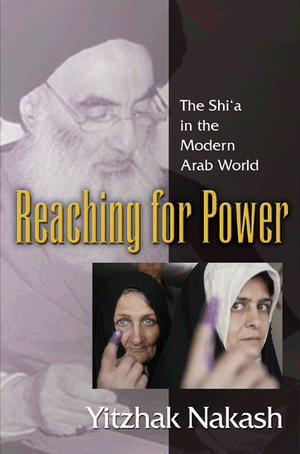
Yitzhak Nakash: Reaching For Power - Shia In The Modern Arab World


I shall write soon about the 5th Anniversary but I wanted to postpone that until the 9th of April, in the meantime I'll review this book since I just finished it.

Like me, Nakash is a non-Shi’i (Iraqi Jew) who seems to have developed a fascination with Shi’ism, he’s written a number of books on the subject, including the solid The Conversion of Iraq’s Tribes to Shiism, a book I found thoroughly researched, sourced and balanced, which led me to pick up this book, making it the second Naqash book I read.

The book is essentially a very informative country-by-country overview of Shia conditions beginning from the nation-state period in the Arab world, it outlines in painstaking detail the relationship between the state and Shi’i community in four gruesome chapters, beginning by Saudi Arabia, Bahrain, briefly touching on Kuwait [which it praises as the most Shia-tolerant], then jumping headlong into the informative Iraq and Lebanon chapters, before finishing with a brief opinion-recommendation.

One of the more fascinating aspects of this book is the illuminative insight it provides in the role different sects played in shaping current nation-states, before reading this book, I voiced the opinion on this blog or some other blogs that the clash between the Ba’ath and the Shia in the 1980s was in essence a clash between the tyrannical secular state and Pan-[Shi’i] Islamic theocracy, with the Sunni-Shia dimension being only secondary in the conflict. I can tell you now that this view is bullshit, the only definitive fixture in the struggle in Iraq is the Sunni-Shi’i dimension, but it often hides behind other ideologies, for example, while the Sunni ruling elite espoused Pan-Arabism, the Shia by and large were more than fearful of compromising their majority-status in Iraq by joining a Pan-Arab domain in which they will be marginalized as a minority, hence their own choice to embrace a modern ideology was the Communist Party, which I believe has less to do with any appeal of Marxism in the Shia community than it being the only modern ideology (as were the trends of times) strong enough to repel Pan-Arabism at the time ; thus, you can understand the amount of reverence the Shi’i community hold for Abdilkarim Qassim (the face-on-the-moon hoax was actually invented by Thawra (Sadr City now) residents after he was executed), the minority-status of the Sunnis compelled them to stress their Pan-Arab ideology so as to embrace their co-religionists and balance their number, often harping on the cultural ties of Shia with Persia, while the Shia preferred an isolationist policy that maintained their advantage and emphasized general Arab and Tribal values, which was what the Communists preached.

Ironically, the very same Pan-Arabism the Shia of Iraq found unappealing was doted upon by their Saudi co religionists, who sought to counterbalance the ideology of the Saudi state’s Pro-US Pan-Islamism (yeah) which had a strong adversary in Nasser’s Pan-Arabism at the time, basically, the Saudi Shi’is embraced any ideology that promises reform and change, here we see that the choice of ideologies in the Middle East was inspired not by the actual principles of said ideologies but the degree of adaptability they offer to persist the rights of respective communities.

Even more interesting is that while the notion in Pan-Arab Iraq was that the Shia are the separatist traitors, in Lebanon, the Sunnis were the ones labeled traitors to Lebanon because Lebanon was the isolationist country the Shias of Iraq desired ; the Christian-minority Maronites went out of their way to forge Lebanon against the demands of Sunnis to unite it with Syria, they designed Lebanon as a Phoenician non-Arab oasis of the oppressed in the sea of Islam, in fact, there are several eye-opening accounts of several botched president Bshara al-Khori projects, including siding up completely with Israel and resettling all the Shia of Jabal Amil in Iraq in order to increase the numbers of Christians.

The book is largely concerned with the modern politics, it doesn't explain for example why the Shia feel so estranged from the Sunnis when they're both Arabs, History-wise, it's informative and recommended, if anything, the reference index is a treasure trove of Arab-only books on the subject. Where it falls short is when Naqqash advocates his upbeat and optimistic opinion, Naqqash views the ascendancy of Shia as a potential reform palette in the Middle East, reading this book, sometimes you might be persuaded to think of Muqtada as a sharp, intelligent grand strategist, not a confused Nasrallah-wannabe with bad oral hygiene, Naqqash says that Shias have moved from confrontation to accommodation regarding the West, he adds that the only reason theocracy rose in full force is because of the lack of a civil alternative, and he doesn’t invest much in Iran or the idea of its possible dominance through the guise of Pan-Shi’ism, instead describing it as a country very persuaded by democracy and civil rights, he mentions the possibility of Iraqi civil war in a single line amidst his love-fest, of course, this book was written in 2005, so he might be excused a little in that regard. Personally, while I do believe that it is absolutely necessary for any meaningful democracy of any sort to emerge out of the Middle East that the oppressed sects get their say, I don’t see Shias as any better than Sunnis in the field of understanding the grasp of pluralism and multiculturalism, they can be just as barbaric, backward and resilient, if not more due to their history of oppression which forced them to go inward, if Shi’is were the majority and Sunnis were the minority, the results would be quite similar, as long as sentiments in the Middle East adopt a method of discourse that consists of dominating everything at all costs, then it’s hopeless.

The only way Shiism could stand a chance at being a platform for accommodation is the same reason why the Shia Ismaili Fatimid state in Egypt [which ruled a Sunni population] exhibited a larger degree of religious tolerance in its times, that is, self-conscious recognition of their own status as a minority, which prompts them to encourage freedom and liberty as necessary for their survival, in this case too, it is a fake democracy aimed only at escaping persecution and not genuine belief in equality and modern citizenship values.

Saturday, March 08, 2008

A Tribute To My Iraqi Shia Friends

Looking at my recent posts, the word 'Shi'i' seems everywhere, I have been ranting too much, way too much about that ; so I thought I'd do this post to remember my good times with them.
Most of my college friends were southern Shi'i, when I first started learning about the differences and hostility between Sunnis and Shia in 2006, this created a dilemma for me, I would spend the night getting so pumped up with rage when learning about the Shia doctrine, and then I would go to college, and that frustration would all fade away the moment I met the first one of them.
When I went to UNHCR back in September 2007, I did not hang out with the elegantly-dressed Baghdadis, instead, I immediately connected with a southerner from Basra ; I can't help their simplicity and modesty, soon enough I was sitting with the whole mashraga, Nasiriya, Hilla, you name it. it felt back like college for a brief while. However, being in Jordan, none of my friends are here with me, and this has naturally led to some imbalance on that point, this post is aimed to at trying to regain that balance and to remind myself and you that it wasn't some apartheid segregation and that only religion is keeping us away from each other.


Sixi Princi:
Princi is my best friend, we worked together on a lot of video projects (notice the early use of the name "Abbas" in this post, subconscious?) he is one of the nicest people one could ever hope to meet, he's now in Sweden and has long hair, beware. Princi has a picture of Sistani above his bed, but he is not an orthodox Shia, for starts he thinks it's completely valid to pray with Sunnis (and he did pray with us in public once in a Sunni mosque amazingly in 2005! Was it so good so late?) and last I heard he doesn't even believe in Mahdi.
Eihab: Eihab was a tall, strangely white, bald dude from Kerbala with Turkish descent. He was a very close friend of mine, an atheist, but like most Iraqi atheists his sectarian identity did not fade with his religion (he chose the 555 bloc). Like me, in his latter days Eihab became more aware of his sectarian identity, but that never affected our friendship ; we joked about it all the way until he died. He was killed in 2006 and he appears in the tribute video I made for him and three other dead pals.
Jidida: Jidida is a Baghdadi who had affinity for Muqtada al-Sadr. He's such a modest dude, he also bore intense hatred for the Badr brigade, who were unmistakably Iranian to him, but more so for Saddam Hussein. I talked about him earlier in my blog here.
Muqdad: Here comes the good stuff. Muqdad comes from Najaf, and he was named after Al-Muqdad al-Aswad, a companion of Ali (he too, is aswad, very dark-skinned), however, I think his similarity with the prominent companion ends about here. Muqdad was a very, very, very horny, muscled individual who'd tell us hilarious fantastical stories about his fake misadventures. God, those were the days...
Mudhaffar "Giraffe": A tall guy from al-Misyab, Mudhaffar was a very simple individual with a very imposing neck, he also asks every new girl in college to be his girlfriend.
Weezi: One time I burnt the garbage can with a hastily-thrown cigarette in our college department as a joke, Weezi instantly searched me out and introduced me to the "cool" community due to that feat. I didn't know Diwaniya people were famous for their wise-cracking until I met Weezi, a Yoda-like smartass character who, in his own words, if he ever wanted to talk to you then that means he wants 5 bucks.
Hamchi: Hamchi was an ultra-religious, Persian-accent-during-prayer Badr-sympathizer from Najaf. He thinks I will go to hell because I don't pray the Shi'i way and he thinks praying with Sunnis is a sin that rivals drinking wine, he was also one of the nicest people I have ever met. I used to mess with him about his suit and ties almost daily, it was with Hamchi that I engaged in the little *honest* sectarian debate at my college and it always ended so respectably, Hamchi is married now and he's working somewhere in the south. Last time I heard from him he wanted to elect Mithal al-Alusi. Both Hamchi and Eihab appear in this early post.

My time with those people were some of the best I have ever had in my life, I never felt strange or detached between them, we never discussed religion or politics, it was all regular college topics: girls, girls and girs. On the contrary, they were so easily lovable and very fun-going and hip, you can understand how difficult it is for me to talk about the huge sectarian differences when all my friends are of the opposite sect, of course, I am aware of some limits, most of these people, for religious reasons (including me) would not marry of the opposite sect (in fact, I did want to marry a Shi'i girl in particular just to annoy a sectarian member of my family, but on thinking it through I realized that the sectarian differences are just too great ; maybe if she's secular, and hot), but it is largely for the memory of those people that I do not want Iraq to divided, it is for those people that I feel truly belonging and I do believe a secular government is necessary to strengthen those ties and de-emphasize the hostile history. Looking back, it's hard for me to decide which is real and what to embrace: the violent religious and historical enmity, or the honest transcending feelings of friendship? I guess it's a problem for all multicultural societies.

*sigh*

Eternal Ziyara كافي يمعودين

There are two places where it would especially suck, life-wise, having a Shia supremacy: Arabia and Iraq.

In Shi'i belief: There are 14 Infallibles = 12 Imams + Muhammed + Fatima (PBUH's daughter.)
Seven of those are in Iraq, (six, but counting the Mahdi)
The others, with the exception of Ridha, who's in Iran, are in Saudi Arabia.

So, what's the big deal? Okay, the big deal is that the Shia hold a mourning ritual and a birth ritual for each of those 14 dudes, that's about an entire month in the calendar where the whole country would have to galvanize all of its resources to protect and serve the hordes of visitors of the shrine of this Imam and that. Not to mention of course, the roads blocked throughout the city for the on-foot visitors, in short, the entire country would have to shut down.

So just when the supposedly 9 million Shia gathering in Hussein's Arabien at Kerbala dispersed, another ziyara was soon taking place in Najaf (where Ali is) - on top of it all, the ceremony is not related to Ali, but it is actually The Martyrdom of the Prophet. I mean, seriously!

and martyrdom? Gee, the Prophet was murdered? upon research, it seems that I have overlooked another feature of the tapestry of the Nasibi Sunni oppression against Shia, it seems that the Prophet was poisoned by Aisha and Hafsa, so that their parents, Abu Bakr and Umar could undertake the plot to deny Ali the caliphate.

All right, I have already established that Sunnis and Shia have little to claim in the vein of friendship or unity, but dude! I'm all for co-existence, but from a statesman point of view, should the year be completely dedicated to one ziyara after the next? Is that all you have to show for being liberated from Saddam Hussein? Secular Shia MP Iyad Jamal al-Din said that the overwhelming attendance of the Shi'i rituals in 2003 and 2004 was because people were trying to release the pent-up pressure of years where those religious rituals were denied by the Ba'ath. But it's 2008 now and it seems to get bigger than ever, Jamal al-Din himself seem to share my view, he was complaining about the politicization of those flagellation ceremonies and its use by political parties to re-assert themselves, Shia claim it's about establishing identity, but shouldn't that have already taken place now? We get it, you're in power! Thank you very much.

Here's the ِABRIDGED!!!! Shia festivities calendar, looking at it, I guess I should be thankful there are ONLY 7 shrines here. In general, martyrdoms are much more important than births, which are only massively celebrated for the principal Imams (Ali, Mahdi, etc)

10 Muharram: Hussein (Kerbala)
24 Muharram: Al-Askari Shrine Explosion, Samarra
25 Muharram: Zain Al-Abideen (Medina)
7 Safar : Hasan (Medina)
17 Safar : Ridha (Mashhad)
20 Safar : Hussein 40 (Kerbala)
28 Safar : Muhammed (Najaf - should be Medina)
5 Rabi1 : Sakina (Damascus?)
9 Rabi1 : Fatima's Joy [At Umar's Death]
17 Rabi1 : Birth Muhammed & Sadiq (Medina)
8 Rabi2 : B Askari (Samarra)
5 Jamad1 : B Zainab (Damascus)
17 Jamad1 : Fatima (Medina)
20 Jamad2 : B Fatima (Medina)
1 Rajab : B Baqir (Medina)
2 Rajab : B Hadi (Samarra)
3 Rajab : Hadi (Samarra)
25 ٌRajab : Musa al-Kazim (Baghdad) <-Al Aimma Bridge, 2005
3 Shaban : B Hussein (Kerbala)
5 Shaban : B Zain Abideen (Medina)
15 Shaban : B Mahdi + 1991 Rev (Kerbala) <- Sadr/Badr clashes, 2007
15 Ramadan : B Hasan (Medina)
19 Ramadan : Ali, Day 1
21 Ramadan : Ali Martyrdom (Najaf)
8 Shawal: Destruction of Shia Shrines in Arabia by Wahabis, 1920s
25 Shawal : Sadiq (Medina)
11 Qi3da : B Ridha (Mashhad)
7 Hijja : B Baqir (Medina)
18 Hijja : Ghadir (Najaf)

Friday, February 29, 2008

Respect Knowingly ٌ

Yesterday was the anniversary of Shia Arba'een. I suppose it's a good time to speak about mutual respect of the religion of others as an essential attempt towards co-existence in Iraq.

I have argued before that Sunnis and Shiites are irreparably hostile on religious terms, I still believe so, but I do believe that a good number of Iraqis from both sects would like nothing more than a peaceful co-existence. A key component towards achieving that goal is a meaningful respect of the opposite sect's religious values, which I believe is only possible under a secular rule that will dimnish the impact of religion on everyday life but also respect the religious rights while working neutrally towards skirting the hostile foundations of the two sects are built upon into a distinct Iraqi idetity, an impossible task of course because most Iraqis want a theocratic government, hence the dilemma, nevertheless I'll just babble on for the benefit of future "Iraqi" generations who might learn from the mistakes of their forefathers, how's that for being self-important.

Many of you might be surprised that I am a fan of Mulla Bassim al-Kahraba'ie, as a matter of fact, Mulla Bassim single-handedly played a huge role in my conversion from Western music into an appreciation of Middle Eastern modes of music. That respect grew out from a curiosity incurred by the ubiquitous presence of the Shia flagellation mega-hit "Ya Yom Ashoof Ei'tabak" everywhere in Iraq, which was endlessly satirized such as [here], and then it developed into an interest in the supernatural, enterainingly apocalyptic vision of Shiism ; you see, the problem with Sunni Islam is that it's stories are rather boring from the perspective of a story-teller, sure it does confirm Judeo-Christian stories of a prophet who talks to animals and the snakes of Moses but those are minor stories, as the principle concept largely center upon a worship of a single God and that's about it. On the other hand, Shiism is centered upon a very passionate
dramatic piece with lots of dark fantastical themes: there's a fascinating battle between Good
and Evil where Evil always wins, there's a centuries-asleep Hidden Wrath-Of-God Imam who will come back, resurrect all the bad guys and kill them, those apocalyptic visions easily stirred the Heavy Metal-, fantasy-, Gilgamish and Enkido-loving spirit within me, there's something ethereal when you listen to a story told in a larger-than-life mesmerizing melody about the righteous holy blood dripping from the cuffs of Musa al-Kazim by Haroon, in the process uplifting those holy men and their antagonists from normal eat-shit-sleep human beings into the mystery-shrouded Demigods in an Iron Maiden song.

Okay, okay, so Shias might be a little annoyed at my comparison to their beliefs with mythologies here, but my point is that I have grown a sense of appreciation for their rich
culture, in fact one of my things I want to do someday is visit Karbala or Najaf like Salam Pax did here (why is the blog's colors like this now?) just for the grandiose curiosity of it. In fact, Sunnis ave somehow recognized the huge impact of those Shia religious hymns in rallying solidarity and they have attempted to replicate it, they are stealing Shia eulgoies and are applying it to Saddam Hussein for example, and also they have a 'Mawlid' celebration (think Nusrat Ali Khan-like), but that is nowhere near as powerful as the Shiite ceremonies, and that is because their version of religion is still a pure simplistic veneration that refuses innovation "bidda3" and isn't as imaginative, it discourages iconization and frown upon any other form of worship than Qur'an recitals, in fact even the pillars of Sunni Islamic music comes from external sources, the most famous Muslim singer, dubbed "Muslim Bono", Sami Yusuf, is a British of Azeri (mostly Shia) origin who was born in Iran, but is for some reason Sunni (even that is in doubt). Another very famous song, Ya Tayba, hails from Indonesia and has Sufi roots (they even say Ya Ali in it), Sufism is a blurry form of Islam which stress Music and dancing as a form of being closer to God. it has many Shia influences but nothing of the complex traditions and stories which makes it offensive to the orthodoxy Sunnism.

Let's revisit Mulla Bassim again, in 2003, Bassim was singing in his "Symphony of Graves" about Saddam Hussein:

Kurd and Arab a victim,
Sunni and Shia altogether.

in 2006, after the Askariya Shrines were demolished, the Mulla sang this hateful masterpiece (edited here, but Nawasib line can still be seen in the end):

O Mahdi, You have four vengeances,
Taim, Adi, Harb and Sakhar
The first took away Fadak from you
The second broke the rib of your mother
The third split open Ali's head
The fourth slaughtered the blood of Hussein
Should Hasan live with us
He would've been poisoned again
and Should Hussein be resurrected
They would have cut his neck again
Lo, Alas your grandfather is buried among the Nawasib!

"Grandfather" refers to the Askari shrines, which is in Samarra, a Sunni town, that is what he refers to by "buried among the Nawasib." In Shia lexicon, Nawasib is the most extreme form of insult you could bestow upon a person, it means a devout enemy of Shia. The poem is also unusual in the sense that it explicitly refers to the names of the First and Second Caliphs (although still somewhat coyly through their tribe names), an extreme rarity as they are usually hinted to as "the people" or just "them."

I find in this poetry a reflection of a more popular resentment, yes, even though the Shia doctrine is hostile to Sunnism, it tries to bury those conflicts so not to cause controversy. But when the Shia Arabs were not warmly accepted by their Arab neighbors, and when terrorists began to blow up Shia markets, culminating in an outright demolishion of a holy shrine, the Shias found less and less reasons to embrace the desire to keep this peace and to declare the ancient hostiliy more brazenly ; it's a reaction, not an action. The Sunnis in general should've been more receptive to Shiites, but they chose to be hostile and a hindrance.

On the other hand, the Shiites should not have announced their arrival to dominance with such a venegance. If the Baathis and the renegade al-Qaeda started to attack Shia indiscriminately, the Shia government gave the general Sunni population, both inside Iraq and outside it, more and more reasons to view the conflict as encompassing Wahhabi and Sunni alike. They basically
justified the Sunni fears that they will be marginalized even if they chose to participate, they
killed innocent civillians by the dozen just the same , and then there was the sloppy, sectarain-themed timing and execution of Saddam Hussein (a very stupid move then was made by Sistani's deputy, who called for Saddam to be executed between the shrines of Hussein and Abbas), the disbanding of the army, and the engulfing of Iraq into a perpetual mourning ceremony whose greatest concern was sealing off everyday life from one Ziyara to the next, another needless of demonstration that we are Shia and we are in power, so eat your heart out.

And this is why Iraq is fucked, because a theocratic government would often tend to aggravate the opposite sect as the difference between the two sects is hostile. This is especially true of Shiism because, like I said, its practices are more apparent, more encompassing, and are filled with dramas, ceremonies, and rituals, which would make the Sunnis alienated and indirectly remind them of those hostilies, on the other hand, regular Sunni Islam* on the other hand is just reading Qur'an and going to Friday prayers, and isn't offensive to any Shia figure.

What we need is a secular government that would realize the danger of religion on Iraq, a government that recognizes Shia dominance and practices but does not make it a perpetual all-encompassing feature of the state, a government that greatly enforces the identity of being an Iraqi before everything else, and the Shia slogans and murals that you will find everywhere if you go to Iraq today always serves to remind you that some people are 'less' Iraqi than others. It is my opinion that this state is impossible to create today, as to why, it's for another time.

For now, I dedicate this hymn to my Shia brothers, it's called Ajat al Aasreen, if anyone knows what this maqam is this please tell me because it sounds like a traditional Iraqi mode and I love it very much.

عجت العصرين و أسود الفضا من طحت يحسين يبن المرتضى


* Excluding probably Wahhabism, it also serves to remind oneself that the dominant form of Sunnism in the Ottoman times was Sufi, a trippy music-loving form itself.